
Why the Acknowledgments Page Is the Best Part of Any PhD Thesis
Personal essay about my PhD thesis
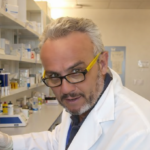
Dr. Jorge Romero
Published: Sep 7, 2026
This site is usually about the evidence behind aging and longevity — what the data says slows it, and what doesn’t.
This piece is different — it’s about why any of that ever mattered to me in the first place.
Every PhD thesis has a section nobody grades, nobody peer-reviews, and nobody cites. It sits before the introduction, usually two or three pages long, and it’s the only part of the entire document written without a single reference number. Ask any doctor — recently minted or decades out — which page of their thesis they’ve reread the most, and it’s rarely the results chapter. It’s the acknowledgments.
I didn’t expect that going in. Six years into a PhD spent tracking molecular networks between nutrition and cancer, I assumed the hardest page to write would be the discussion — the one where you have to defend what your data actually means. It wasn’t. The hardest, and by far the most rewarding, was the page where I had to explain who had been standing next to me the whole time.
Read time: 8 min
The Page That Isn’t Really About Science
Here’s the strange thing about a thesis acknowledgments section: it’s the only place in hundreds of pages of methodology and statistics where the actual subject is honesty. Not data honesty — the other kind. You’re forced, in a way almost nothing else in academic life forces you to, to sit down and ask: who actually got me here? Not who’s listed as a co-author. Who taught me how to hold a pipette without shaking. Who covered for me during a bad month. Who kept asking ‘how’s the thesis going?’ over coffee for six years straight, genuinely wanting to know. Who put up with my crap.
I wrote mine at the tail end of finishing — that strange, slightly delirious window when you’ve just handed in hundreds of pages and your brain hasn’t fully believed it yet.
None of this happened in my twenties, either — that’s when I finished a very different degree, in economic sciences. I went back to formal study decades later, this time in health-related science, and did most of the actual work well into my fifties — which meant almost everyone in this story was younger than me, including the professors, teaching me things I was encountering for the very first time.
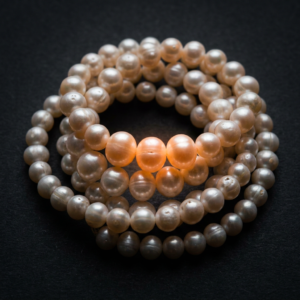
I reached for the only image that felt true: a pearl necklace, growing one bead at a time, each pearl a person who showed up along the way. A labmate here, a professor there, the first working scientist who ever took me seriously. By the time the thesis was written, I’d gone back for a diploma, then a degree, then a master’s, then a doctorate — three years became eleven — and the necklace had already wrapped itself around my neck several times over. It hasn’t stopped growing since. Beads that didn’t weigh anything at all, somehow, despite there being so many of them.
The Names Nobody Outside the Lab Will Ever Know
If you’ve written one of these yourself, you know the ending of every paragraph looks roughly the same: thank you for believing in me. Thank you for your patience. Thank you for the lab meetings that were more bearable with you in the room. On paper, it should read as repetitive. It never does. Every “thank you” carries an entire shared history that only two or three people on earth will ever fully understand — a specific morning, a specific mistake, a specific kindness that happened at exactly the right moment.
That’s what makes acknowledgments impossible to write generically, even when you try. I thanked my family — I wasn’t the best company for a long time. I thanked a friend for noticing the half a microliter I couldn’t see in my own pipette myself. I thanked colleagues for arguing with me about what “fasting” actually means, for letting me interrupt them mid-thought with a molecular question that had been bothering me since 2 a.m.
Some of it is funnier than a thesis has any right to be. One colleague, a biochemist as Canadian as a person can be, somehow didn’t care for hockey at all — a detail I brought up every chance I got, for months, because it never stopped being funny to me that it was true. Two others in the group had a sense of humor so good we used to joke, half-seriously, that they should patent it — that “thank you” alone was underselling what they were worth to everyone who worked near them. And in my first weeks on a clinical research team, my job was to weigh and measure patients back to back for hours. I was incredibly shy at the time, and my face was somewhere beyond red for most of the day. I didn’t stop sweating until well after I’d gotten home each night.
None of that means anything, strictly speaking, to a stranger reading it. And yet it’s the most truthful writing in the whole document — because the truth of six years in a lab isn’t the p-values, it’s the hockey, the patent-worthy humor, the scarlet face.
The One Paragraph That Wasn’t About the Lab At All
Somewhere in the middle of my own acknowledgments, gratitude and grief arrived on the same page, and I let them.
My father died of cancer at 59. I’m almost 61 now — already past the age he never got the chance to reach. I wrote him a paragraph, addressed directly to him, the way you’d write to someone you expected to argue back. I told him I wished I could hand him a printed copy and ask him for a pen, so he could write something in the margin. I told him I wanted to sit and complain with him about how things never change in this country, the way we always used to. I told him I missed him more than I knew how to say, and that I hoped, wherever he was, he was enjoying this moment with me. This thesis is for you.
I don’t think I could have written that sentence anywhere else in the document. Not in the introduction, not in the discussion, not in a single figure legend. The acknowledgments page is the only part of a scientific thesis with room for something that isn’t a hypothesis — and grief, unlike almost everything else in a PhD, doesn’t need one.
What This Has to Do With You, Whether You’ve Ever Set Foot in a Lab or Not
I’m not telling you this because I think you need to read a stranger’s thank-you list. I’m telling you because I think most of us are sitting on our own version of this page, whether or not we’ll ever be required to write it. A PhD forces the exercise: stop, look back at everyone who carried a piece of the weight, and say so, plainly, before you’re allowed to move on. Most people never get forced into that exercise. Most people just keep moving.
If you’re a PhD student somewhere in the middle of your own thesis right now, dreading the day you have to write this page: don’t. It’ll very likely turn out to be the only part of the whole thing you’re glad you didn’t outsource, didn’t rush, and didn’t let anyone edit down to something safer.
And if you’ve never written a thesis and never will — none of this was ever really about the degree. It works the same whether you’re a good professional, a devoted parent, a good child, a loving partner, or simply a decent person to have around. Who are the beads on your own necklace? Who taught you to hold the metaphorical pipette steady? Who would you write a paragraph to, if someone told you it was the one page allowed to be only true?
This isn’t about being a doctor.
It’s about saying thank you,
to the people who actually earned it,
while they can still read it.
Curiosity pulled me into science in the first place — not ambition, not a career plan, just wanting to understand how the body actually works. Somewhere along the way, that curiosity turned into passion, and passion, if I’m honest, tipped a little into obsession. But finishing that page taught me the actual lesson the six years in a lab were for: it was never really about the results. It was about becoming someone worth the respect of the people who showed up.
That’s not nothing. It would be an enormous privilege.
And the necklace keeps growing.